


Data Center Cooling Market Overview and Technology Landscape

The digital economy's relentless expansion, powered by cloud computing, big data analytics, and artificial intelligence, is generating an unprecedented amount of computational heat, making efficient thermal management a cornerstone of modern infrastructure. A comprehensive analysis of the Data Center Cooling Market reveals a sector undergoing a critical transformation, driven by the dual imperatives of managing escalating heat loads and achieving ambitious sustainability goals. Traditional air-based cooling methods are increasingly being pushed to their limits by the rising power densities of modern IT hardware. This has catalyzed a wave of innovation and investment into more advanced and efficient cooling solutions, including sophisticated air containment strategies, rear-door heat exchangers, and, most significantly, a decisive shift towards direct liquid cooling technologies. The primary market drivers are not just technical but also economic and environmental. The exorbitant cost of energy, which can account for a significant portion of a data center's operational budget, is forcing operators to seek solutions with a lower Power Usage Effectiveness (PUE). Simultaneously, growing corporate and regulatory pressure to reduce carbon footprints and water consumption is making sustainable cooling a key competitive differentiator and a matter of corporate social responsibility. This confluence of factors is fundamentally reshaping the market, moving it from a simple facilities concern to a strategic enabler of next-generation computing.
The operational continuity and performance of a data center are inextricably linked to the effectiveness of its cooling system. IT equipment, from servers and storage arrays to networking switches, generates a tremendous amount of heat, and if this heat is not efficiently removed, it can lead to component failure, performance throttling, and catastrophic downtime. The core function of a data center cooling system is to maintain a stable and optimal operating temperature and humidity for this sensitive equipment. Historically, this has been achieved through room-based air conditioning, using Computer Room Air Conditioners (CRACs) or Computer Room Air Handlers (CRAHs) to flood the data hall with cold air. However, as server rack power densities have increased from a few kilowatts per rack to tens and, in some cases, hundreds of kilowatts, these traditional methods have become increasingly inefficient and unsustainable. A significant portion of the energy consumed by a data center is used not for computation, but for cooling, making thermal management a prime target for efficiency improvements. The Data Center Cooling Market size is projected to grow USD 15.35 Billion by 2035, exhibiting a CAGR of 5.41% during the forecast period 2025-2035.
The future trajectory of the data center cooling market is pointed towards a more intelligent, adaptable, and liquid-based approach. The rise of high-performance computing (HPC) and artificial intelligence (AI) workloads, which rely on power-hungry GPUs and other accelerators, is rendering air cooling completely inadequate for the highest-density racks. This is the primary catalyst for the market's pivot towards liquid cooling, which is thousands of times more effective at transferring heat than air. This includes direct-to-chip cooling, where liquid is piped directly to the hottest components on a server, and full immersion cooling, where entire servers are submerged in a dielectric fluid. In parallel, there is a strong trend towards using AI and machine learning to optimize the cooling systems themselves. AI-powered platforms can analyze real-time data from thousands of sensors within a data center to dynamically adjust cooling output, airflow, and water temperature, ensuring that cooling resources are deployed precisely when and where they are needed, thereby minimizing energy waste. This evolution towards more precise, liquid-based, and intelligently controlled thermal management solutions will define the market's landscape for the foreseeable future.
Top Trending Reports -
Kategorien
- People and Nations
- Transport and Mobility
- Climate Adaptation
- Business and Ecommerce
- Climate Startups
- Climate Policy
- Energy
- Nature and Wildlife
- Food
- Sustainability
- Innovation
- Health
- Climate Justice
- News and Politics
- Climate Finance
- Agriculture
- Research and Education
- Livability
- Climate Cities
- Science
- Sports
- Carbon
- Wellness
- Climate Change General
- Environment and Wildlife Conservation
- Coastal and Oceans
- Manufacturing and Materials
- Pollution
- Climate Mitigation
- Climate Conferences and Events
- Land and Soil
- Youth in Climate
- Weather and Disasters
- Greenhouse effect
- Recycling and Waste management
- Climatexi
- How To
- Products and Services
- Storytelling
Mehr lesen
A Modern Approach to Hair-Free Skin Laser hair reduction has become the most reliable solution for people seeking smooth, hair-free skin without the constant struggle of waxing or shaving. Many clients who visit Essence Skin Care for advanced cosmetic procedures also consult the Best Dermatologist for Hair Loss in Guwahati, ensuring they receive complete and trustworthy skincare guidance along...

The Water Treatment Chemicals Market is undergoing significant expansion as industries, municipalities, and commercial sectors increasingly prioritize clean water, regulatory compliance, and sustainable resource management. Rising global water scarcity, growing industrialization, and stringent government regulations on wastewater discharge have amplified the demand for advanced...
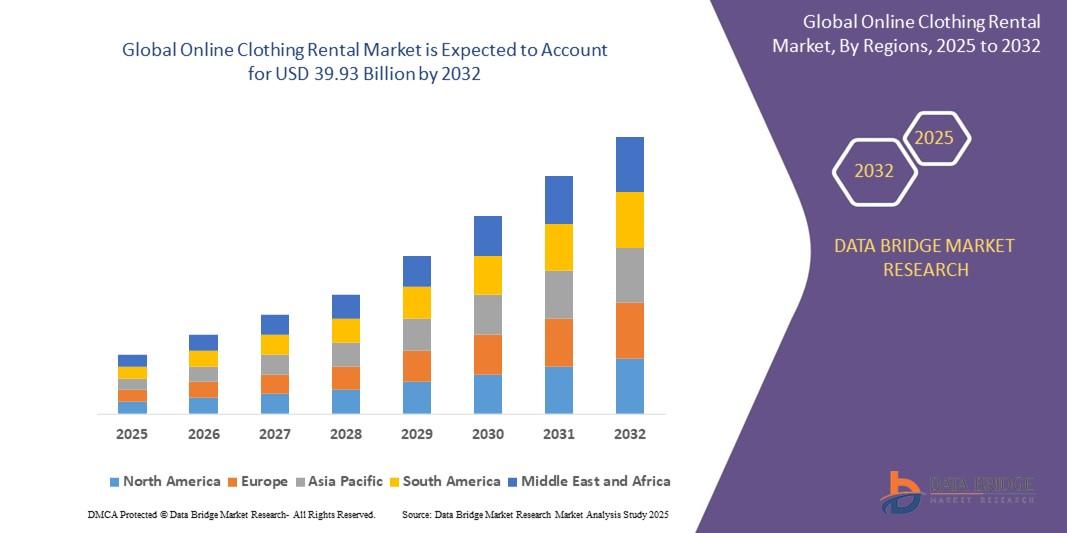
"In-Depth Study on Executive Summary Online Clothing Rental Market Size and Share The global online clothing rental market size was valued at USD 2.61 billion in 2024 and is expected to reach USD 39.93 billion by 2032, at a CAGR of 40.60% during the forecast period The world class Online Clothing Rental Market business report presents with the...
The global sports sponsorship market is experiencing unprecedented growth, projected to reach US$ 125.8 billion by 2033 from US$ 68.2 billion in 2025, at a robust CAGR of 8.2%. This transformation is fueled by the commercialization of sports and the digital revolution, which are rapidly reshaping how brands, teams, and fans interact in the sports ecosystem. Connecting You to...

"Executive Summary Myeloperoxidase Deficiency Market Value, Size, Share and Projections The global myeloperoxidase deficiency market size was valued at USD 30.50 million in 2024 and is expected to reach USD 46.80 million by 2032, at a CAGR of 5.50% during the forecast period Being a comprehensive in nature, Myeloperoxidase Deficiency Market report...