


Smart Agriculture: The 5G Network Advantage
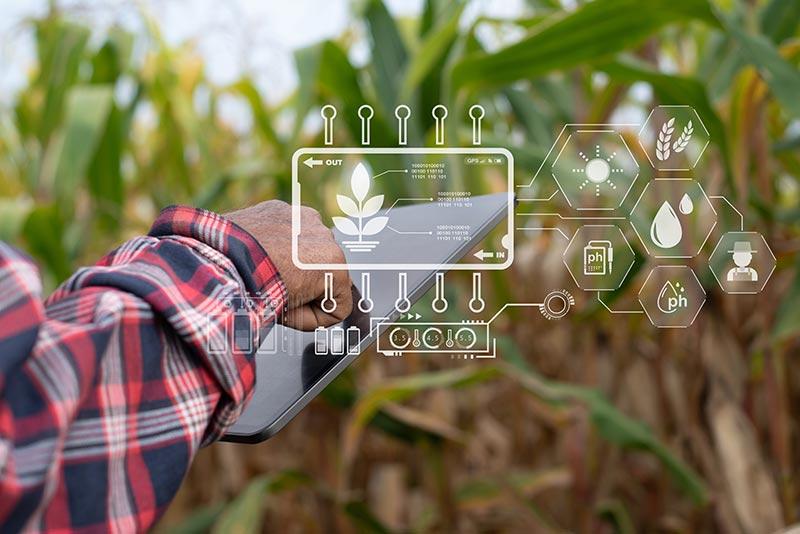
Agriculture is evolving faster than ever before. With the global population expected to reach nearly 10 billion by 2050, the demand for food supply is rising sharply. Traditional methods are no longer enough to meet these challenges. That’s where smart agriculture, powered by technologies like the Internet of Things (IoT), drones, and artificial intelligence, comes into play. But there’s one key enabler that ties them all together—5G.
The Role of 5G in Modern Farming
5G is not just another step up from 4G; it’s a complete transformation. Offering ultra-fast data speeds, extremely low latency, and better network capacity, the technology opens up new possibilities for farmers and agritech innovators alike.
In smart agriculture, sensors and connected devices must operate in real time to monitor weather, soil health, pests, and crop growth. The extensive data collected from these devices needs to be processed instantly to take immediate action. This is where 5G’s low latency makes all the difference—it allows near-instant communication between devices, ensuring faster decision-making and automation.
Key Advantages of 5G in Agriculture
-
Precision Farming:
Using drones, GPS-enabled machinery, and soil sensors, farmers can apply water, fertilizer, and pesticides only where needed. This targeted approach reduces waste, lowers costs, and promotes sustainable practices. With 5G’s reliable connectivity, precision farming becomes more efficient and scalable even in remote areas. -
Real-Time Monitoring:
5G networks allow continuous data transfer from IoT devices placed across farms. Farmers can receive live updates on soil conditions, moisture levels, temperature, and crop health. Alerts can be sent instantly if something goes wrong—like a sudden drop in temperature or pest detection. -
Autonomous Farming Equipment:
Self-driving tractors, robotic harvesters, and automated irrigation systems are already in use, but 5G makes them perform seamlessly. The smooth communication between machines ensures safety and coordination in complex tasks such as harvesting or planting. -
Supply Chain Efficiency:
Beyond the farm, 5G helps track produce from field to market through connected logistics. Sensors can monitor and relay information about the freshness and storage conditions of perishable goods, reducing food waste and improving transparency. -
Sustainable Resource Management:
With precise data insights, farmers can use resources more responsibly. Water consumption, fertilizer application, and energy usage can all be optimized, helping reduce environmental impact while enhancing productivity.
Read Full Research Study: https://marketintelo.com/report/smart-agriculture-5g-network-market
Overcoming Connectivity Challenges
While 5G promises major benefits, rural connectivity remains a challenge in many regions. Deploying 5G infrastructure in remote farming areas requires collaboration between governments, telecom companies, and agritech startups. Satellite-based 5G solutions and hybrid networks could help bridge this gap until full coverage becomes available.
The Road Ahead
The integration of 5G in agriculture is more than just a technological upgrade—it’s a cornerstone for future food security. Countries investing in 5G-enabled smart farming will see higher productivity, improved sustainability, and stronger food supply chains.
As the agriculture sector embraces digital innovation, the combination of 5G, IoT, and artificial intelligence will redefine farming from being labor-intensive to knowledge-driven. Farmers will gain real-time insights, adopt data-backed decisions, and contribute to building a more resilient agricultural ecosystem.
Категории
- People and Nations
- Transport and Mobility
- Climate Adaptation
- Business and Ecommerce
- Climate Startups
- Climate Policy
- Energy
- Nature and Wildlife
- Food
- Sustainability
- Innovation
- Health
- Climate Justice
- News and Politics
- Climate Finance
- Agriculture
- Research and Education
- Livability
- Climate Cities
- Science
- Sports
- Carbon
- Wellness
- Climate Change General
- Environment and Wildlife Conservation
- Coastal and Oceans
- Manufacturing and Materials
- Pollution
- Climate Mitigation
- Climate Conferences and Events
- Land and Soil
- Youth in Climate
- Weather and Disasters
- Greenhouse effect
- Recycling and Waste management
- Climatexi
- How To
- Products and Services
- Storytelling
Больше
Saudi Arabia Energy Management Market Size & Insights According to MarkNtel Advisors study The future of Saudi Arabia Energy Management Market size is valued at around USD 298 million in 2025 and is expected to reach USD 578 million by 2030. Along with this, the market is estimated to grow at a CAGR of around 11.67% during the forecast period, i.e., 2026-30. What are the Key...

Agriculture Technology-as-a-Service Market Size & Insights As per recent study by MarkNtel Advisors The Global Agriculture Technology-as-a-Service Market size was valued at around USD 2.8 billion in 2024 and is projected to reach USD 5.74 billion by 2030. Along with this, the market is estimated to grow at a CAGR of around 12.70% during the forecast period, i.e.,...
"Future of Executive Summary Shrink Wrapping Machine Market: Size and Share Dynamics Global shrink wrapping machine market size was valued at USD 7.30 Billion in 2024 and is projected to reach USD 10.22 billion by 2032, with a CAGR of 4.30% during the forecast period of 2025 to 2032The Shrink Wrapping Machine Market report offers an analytical assessment of the prime...

"Competitive Analysis of Executive Summary Automotive Uninterruptible Power Supply (UPS) (In Vehicle UPS) Market Size and Share Global Automotive Uninterruptible Power Supply (UPS) (In Vehicle UPS) Market, was valued at USD 2955.97 million in 2021 and is expected to reach USD 4782.95 million by 2029, registering a CAGR of 6.20% during the forecast period of 2022-2029. Global...
"Executive Summary Wood Heating Stoves Market: Growth Trends and Share Breakdown The global Wood Heating Stoves Market size was valued at USD 9.13 billion in 2024 and is projected to reach USD 14.77 billion by 2032, growing at a CAGR of 6.20% during the forecast period. While preparing this professional and exhaustive Wood Heating Stoves...